
How to Write a Statement of the Problem in Thesis?

For conducting research, a problem statement is going to be an essential point! If you are at the introduction chapter, and you have to write the problem statement, then make sure that it is adding all the important issues of the investigation to make a perfect reason for the research. The statement should be written at a specific time when the researcher is aware of the main concerns of the investigation.
Statement-of-the-problem

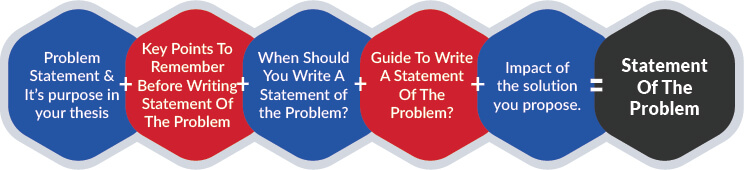
Problem Statement & Its Purpose In Your Thesis

Everything in the thesis is there with a purpose, for example the purpose of the investigation supports the major role of the investigation. The research always comes up with a problem for any research paper help, this problem is best described in the section of the problem statement.

What is a statement of the problem?

A problem statement is a sentence that is very explanatory in highlighting the main opinion of the research question. It uses the plan of focus for the whole investigation mechanism. It is not a short sentence, because it may comprise the whole discussion thematically.

Covid 19

Why is the problem statement important?

Of course, the problem statement is important! This fact cannot be denied. It is the main pillar of the research; the researcher will be unable to carry the investigation unless there is some problem. Well, research take more time and if you have HRM research paper writing service. It is giving the main skeleton to the research plan so the researcher may follow the thematic plan given on account of the problem statement.

Key Points To Remember Before Writing Statement Of The Problem

Some main points should never be ignored while writing down the problem statement for the thesis. They are:

  • Describe how things should work!

One should elaborate that what is the context of happenings in the thesis plan. The things sequence and their work trends should be discussed sequentially.

  • Explain the problem, why it matters?

One should tell the opinion in the problem statement that why the issue is there, why it is very important and why it is happening.

  • Explain the problem’s financial costs!

The problem might be impacting the financial space as well so the financial opinion will be catered in addition.

  • Propose a way out!

The problem is there, so there might be some solution to it. The problem statement will not directly lead to the solution but it may propose one.

When Should You Write A Statement of the Problem?

The researcher will not write down the problem statement in the very opening of work. Indeed, the researcher will be streamlining the main themes of the research and sorting out the major and minor concerns. One may write the problem statement when the introduction chapter is almost near to the end. It is because, at this time, the researcher can note down the main opinions and manage the main points of the analysis to finalise the problem statement.

Guide To Write A Statement Of The Problem

The problem statement is not simple and forthright, it is giving the opinion about the major plan that why the current research is existing. It is also formulating the focus of work that why the research process can proceed and investigation is going on.

Key to have complete knowledge of the problem

The problem statement is the complete package to reach the main opinion of the research. It is streamlining the proper plan to ensure that there is some concern for discussion. It is a smart statement but it should be comprehensive in all regards!

– Practical Research Problem Statement

A practical research problem statement is highlighting the problem in truly elaborated form. It is giving complete knowledge of the problem.

– Theoretical Research Problem Statement

The theoretical problem statement is holding more concern for availing theoretical framework and applications of theories.

Importance & Relevance Of Your Problem

The problem statement should be relevant, it should not be discussing any useless or irrelevant idea in the present time.

– Practical Research Problem Statement

The practical problem statement will apply the relevancy rule in the problem statement’s main framework.

– Theoretical Research Problem Statement

The theoretical research should be motivated to apply the theories of relevant support to develop a problem statement with complete relevance of theory in the statement.

Write The Aims & Objectives

It is always essential to ensure that the problem statement is succeeding in framing the aims and objectives of the problem discussed in the whole topic.

– Practical Research Problem Statement

The practical research problem will envelop the aim and objectives for sue while modifying the problem statement.

– Theoretical Research Problem Statement

The aims and objectives should be enveloped in relevancy with the applications of the theories in describing the problem statement.

Impact of the solution you propose

There is a positive impact of the proposed solutions upon the problem statement and the flow of the research. A problem statement with the hidden proposed solution in it is a guideline not only for the researcher but also for the reader. This may track the time and carry better support to learn from the proposed way out. It is the roadmap that is leading the researcher to the last point of the research sequentially.

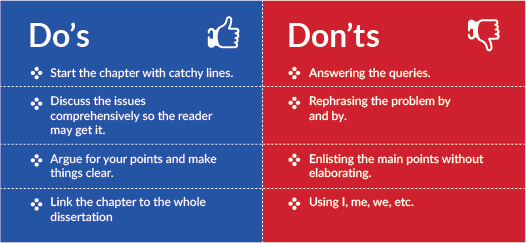
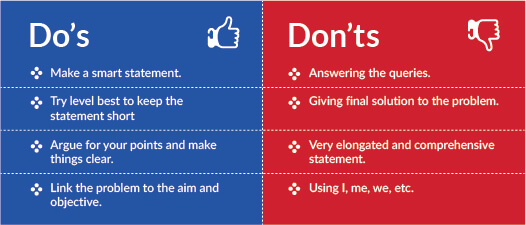
Do’s and Don’ts
statement

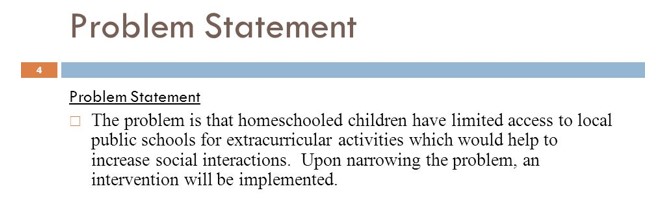
Let us see through an example

The problem statement is displayed in varied manners according to the requirements of the research topic and its areas. The problem statement depicts the best opinion about what, why, how and when of the research concerns.
Take Away

  • The introduction chapter is the window opening to the whole thesis.
  • The introduction chapter shapes the whole dissertation plan.
  • The introduction chapter should be concise in discussing the headings and sub headings.

Sara Nathan
Sarah Nathan

I am Dr. Sara Nathan and I have done a Ph.D. in aviation management. I have experience of 10 years in mentoring UK’s Students. Over this decade. I enjoy being able to help researchers all around the world as imparting valuable information has always been my passion. Writing & Reading are my passions. For detail about me and to read my other blog you can visit my profile:

My Profile

It is Time to Boost Your Grades with Professional Help

Hire a Writer

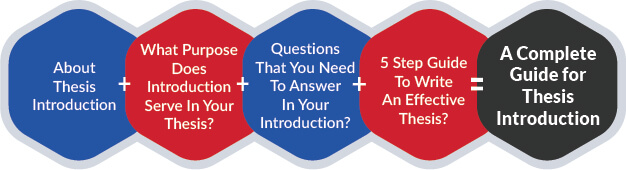
    A Complete Guide for Thesis Introduction

    Are you going to start writing a thesis? The beginning chapter will be the first chapter of the thesis introduction. It will be an opening to the whole plan so it should be best in presentation plus quality. The chapter is surely going to make the first impression upon the examiner to justify your whole thesis outlook.

    Let us go through some of the essential ingredients of the chapter to realise the importance of the chapter for the thesis.

    Thesis-Introduction

    About Thesis Introduction

    An introduction chapter is simply tagged as the very chapter of the thesis which to tell the reader that what is there in the whole thesis. The chapter comprises the main opinions of the thesis research problem along with the discussion on the critical points regarding the problem of research. The chapter gives a smart and forthright perspective of the whole dissertation.

    What Purpose Does Introduction Serve In Your Thesis?

    No doubt, an introduction chapter is of profound importance! It is the window to the whole plan of research, the reader will go further if there is some weightage of the introduction chapter. Its ingredients add to its weightage because they convey the message that why the whole research is there and the investigation is conducted.

    What are the purposeful ingredients of the introduction chapter?

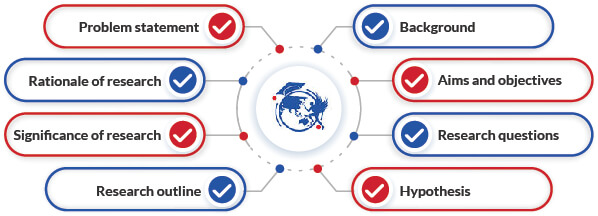
    Like, the ingredients of a dish help out to develop the taste in it, the ingredients in this chapter also ensure its potential to make it work. Nothing is there in the introduction chapter without purpose, all the headings are existing purposefully. The very ingredients of the introduction chapter that are common in all dissertations and thesis are:

    What Purpose Does Introduction Serve In Your Thesis?

    The purpose of the introduction chapter is to give a window to the whole dissertation. In this way, the researcher can shape the whole format of research and the reader can access the relevant portion of the research for reading.

    5 Step Guide To Write An Effective Thesis?

    An effective thesis should be comprehensive in all regards, for the purpose the ratio of influence on behalf of the introduction chapter is quite higher. The introduction chapter is surely giving the first impression that it is animated for sure so the reader will go through it. 5 step guidelines are here to make your thesis more effectively.

    Introduction To The Topic

    The first point is to familiarise the topic in a catchy way! The reader will develop interest if the topic is pretty catchy and the content is worth reading. The topic’s weightage, need, importance and value in the thesis should be conveyed animatedly. The creatively written opening statements are going to ensure more readers for the thesis.

    Background Research

    Background Research & Previous Study

    It is a fact that no topic is new! Probably if a topic is new to some extent, still some relevance and factual data are available about it in the previous age. The introduction chapter is aiming to give the background of the present research in such a way that it should give the mainframe to the thesis. The previous studies will be elaborately discussed in the literature review section, so the introduction chapter will just highlight the main focuses of the same topic in the past researchers perspective.

    State The Research Problem That You Will Address

    The reader is always keen about reading the best research paper writing service and resolve all the problem as it is the main roadmap to conduct the research. Without an authentic research problem, truly there is no need to conduct a research process. So, the problem should be formatted in the frame of the introduction chapter lively and comprehensively in a single statement, with some paragraphs of discussion.

    What Is your Research Question?

    The research aims and objectives come to mind when you talk about the research inquiry questions. There indeed was some thought behind the investigation, that lead to conduct the study. So, that thought will be manipulated in the form of research questions. Make sure that the whole research is revolving around reaching the answers to these questions and you just have to hire economics research paper writing help, so for this purpose, modify the authentic and useful research questions.

    Research Question

    Your Thesis Aim & Objective

    Aim and objectives are giving the idea that here your position is of an archer who is supposed to hit the exact middle point on the points’ board. So, if your aim is streamlined and you are adept to hit the mid-point then it is sure that the introduction chapter is aware of the main aim of the research. The aim is only one but it gives birth to three to four objectives to make the plan clearer.

    research quote
    investigate

    Discuss Research Limitation

    There are some limitations of every study! They may show the pathway to show what are the thematic trends; that act as a hurdle on the way or research plan. The limitations bound the research focus this is why they have an animated role in carrying the plan, they should be discussed in comprehensive support to see the limits of the study.

    Set Up An Outline

    The outline makes the mindset of the researcher. It is always helpful as it is defining the footprints to walk on. In this way, the researcher is seeing that what is the next step and how the format will move forward. Further, the reader likes to read it because it is giving support to the reading material at hand.

    thesis research service

    Do’s and Don’ts

    Do_donts

    Let us see through an example

    The following example is helpful to see the whole plan of action that how the flow of the introduction chapter is a guideline to the reader. In this way, the reader will give preference to the given study and review it on a priority basis.

    Example of an introduction This chapter presents discussion on E-learning definitions and concepts, utilization of E-learning, previous studies on utilization of E-learning, previous studies on E-learning utilization in engineering education, beliefs, educators beliefs about teaching and learning, self-directed learning, previous studies on relationship between self-directed learning and E-learning, readiness, previous studies on readiness for E-learning, selected personal characteristics and finally the summary for the chapter.

    Take Away

    • The introduction chapter is the window opening to the whole thesis.
    • The introduction chapter shapes the whole dissertation plan.
    • The introduction chapter should be concise in discussing the headings and sub headings.

    It is Time to Boost Your Grades with Professional Help

    Hire a Writer

      A Complete Guide to Write Research Aims and Objectives

      The importance of making a good quality aim and objectives of a research is paramount in the success of the research.

      In this post, you will learn:

      • What is research aim?
      • What are research objectives?
      • How to differentiate between research aim and research objective
      • Examples of research aims and objectives
      • Key points to remember while writing research aim and objectives
      • Do’s and Don’ts

      What Is Research Aim?

      The research aim is the primary focus of the research and determines what the research serves to do. It defines the purpose of the research and tells the audience what the research aims to achieve.

      Because research aims are so important for the study, a sun heading in the introductory chapter is usually dedicated to them. They are written in a paragraph form and define the main purpose of conducting the research on a topic.

      Example of a good quality research aim

      Research about the effects of climate change on the mental health of young adults can be worded as follows:

      “The effects of climate change information on the minds of young adults are under researched. This research aims to find the effects that climate change information has on the mental health of young adults. By studying the effects of the intensity and frequency of the consumption of climate change news and forecasts among young adults, this study aims to see how climate change information is influencing their mental health.”

      The above research aim is focused and clear and presents the reader with a clear understanding of the purpose of the research.

      What Is Research Objective?

      Research aims are related to research objectives. The research aim determines the overall purpose of the study, and the objectives determine in what ways that purpose will be achieved. The purpose of the research aim is separated into subsections. However, If any you need to order IT Research Paper help services then you have to take a survey on the net. These subsections are smaller steps that define the objectives of the research.

      Research objectives are usually written in the form of a list. These small bits of steps can be checked off as the research progresses. They are written in chronological order, starting with the first objective that needs to be achieved and ending with the final one.

      Example of research objectives

      Taking the example of the research aim above, we can divide it into smaller sections to create specific aims of the research.

      1. Understand the concepts of climate change and mental health
      2. Understand the relationship between climate change and mental health
      3. Determine the frequency and intensity of climate change news consumption among young adults
      4. Determine the frequency and intensity of news affects the mental health of young adults
      5. Develop recommendations for clinical practice in the field

      From this example, you can see how the research aim was broken down into smaller, specific objectives that were then listed down.

      Differentiate Research Between Aims & Objectives

      Although the two concepts are related, they are not the same. The differences between research aim and research objectives are:

      1. The way they are worded are different: Research aim is worded in a wide scoped way, while research objectives are worded as specific, narrowed down tasks.
      2. The focus of the two are different: research aim focuses on the overall purpose while research objectives focus on how to achieve that purpose.
      3. The purpose of the two are different: research aims are concerned with the overall findings of a research, which are long-term, while research objectives serve to define the short term aims of the research.
      4. The way they are presented are different: research aims are written in a small paragraph form while the objectives are written in the form of a list.

      3 Key Points To Remember While Drafting Research Aim

      The ways of writing a research aim varies with the researcher, but there are certain points to keep in mind to write a good quality research aim:

      1. Answer the “why” question of the research: A research aim needs to provide an answer for why the study is being conducted. It needs to describe, in a small sentence or phares, why the research is important to conduct.

      Taking the example of the research aim above, we can see that it answers the why question:

      “The effects of climate change information on the minds of young adults are under researched”.

      2. Answer the “what” question of the research: this is the main purpose of the research aim, as it signifies the main aim of the research.

      From the example above, the “what” question is answered as follows:

      “This research aims to find the effects that climate change information has on the mental health of young adults.”

      3. Lastly, the research aim needs to answer the “how” question. In a simple sentence or a few phrases, it should outline the main way in which you are planning to achieve the aim.

      From the example above, the “how” question is answered as follows:

      “By studying the effects of the intensity and frequency of the consumption of climate change news and forecasts among young adults, this study aims to see how climate change information is influencing their mental health.”

      Checklist of research aim:

      • Tells the purpose of research
      • Tells why the research is important
      • Tells how the aim will be achieved
      • Is clear and concise

      5 Key Points To Remember While Drafting Research Objective

      An easy way to determine the quality of your research objectives is to apply the SMART method to them:

      1. You need to make sure that the objectives are worded as specific tasks you need to achieve. They should not be vague.
      2. You should ensure that the objectives are measurable, meaning that they allow you to see how much of them have been achieved and how much are left to work on.
      3. The objectives need to be achievable, meaning you should have the resources to work on them.
      4. They need to be relevant to getting to your research aim.
      5. They need to be achievable in the time you have available for your research project.

      In the example above the objectives follow the above mentioned criteria. While making your own objectives, make sure to evaluate them using the points above to ensure your objectives are good quality.

      Checklist of research objectives

      • Specific
      • Measurable
      • Achievable
      • Relevant
      • Timebound

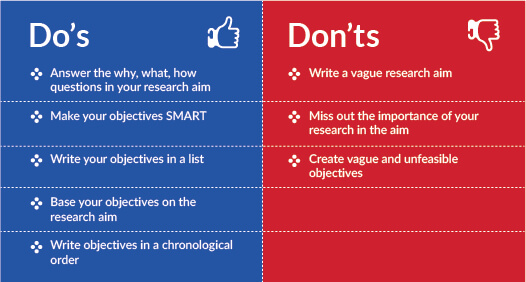
      Do’s and Don’ts of research aims and objectives

      What to do and what to avoid in writing aims and objectives

      research-aims-and-objective

      The Takeaway

      • The research aim is the primary focus of the research.
      • Research aims are related to research objectives
      • The objectives determine in what ways that purpose will be achieved.
      • Research aim needs to answer the “what”, “why” and “how” questions of the research.
      • Research objectives need to be SMART.
      Author
      R.Watson

      Blogging has been my favourite part-time ever since. However, after graduating from high school, I chose to blog, as my career. It has been 5 years and I am here, blogging my heart out. Writing is the best way to creatively mention your thoughts, and I am a creativity expert!.

      My Profile

      It is Time to Boost Your Grades with Professional Help

      Hire a Writer

        What is a Research Question and How to Write it?

        What is a Research Question & Why Is It Important For Your Thesis?

        A research question is what it says on the tin, it is a question some research is seeking to answer.

        In this post, you will learn

        • What is a research question
        • Why it is important
        • Example of a research question
        • How to write a strong research question
        • Problems in finding research gap and the types of research gaps
        • Do’s and Don’t’s

        What is a research question?

        It is based on a research problem which requires further investigation. Through analysis, research aims to find the answer to that research question.

        Research questions are based on sound research on the topic, also worries those students who stuck in marketing research paper and they really need help from reliable resources. so they are evidence-based questions that need scientific research to answer.

        Studies can utilize one research question or more than one, depending on the scope of the study.

        Why is it important for your thesis?

        Research question is essential for your thesis as it

        • Gives you a concise, narrowed down area of research your thesis is focusing on.
        • Gives your thesis a blueprint which it needs to follow.
        • Provides your thesis with set boundaries and determine its scope.
        • Determine what methods you need to select for your thesis

        Example: A thesis about the effects of video games on the behaviour of children can be narrowed down by framing the research question as follows:

        What is the effect of cooperative online video gaming on the prosocial behaviour of school going children?

        Ingredients To Draft A Perfect Research Question

        Good research questions have the following ingredients:

        They are clear

        By themselves, they are enough to explain the purpose of the research. A good research question, need a good research paper writing help, while being read by the audience, needs to have enough information about the topic that they understand what the research aims to accomplish.

        They are narrowed down

        Good research questions provide clear boundaries for the research. They identify the parameters of the variables under study. They provide a clear focus for the research.

        They are concise

        They need to be worded in a short way, avoiding long and vague phrases. The words need to be clear and focused on the topic.

        They are argumentative in nature

        They can be answered in more than one way and need to be worded so that they are open to scientific debates, rather than aiming to find facts.

        They include a complex issue

        A good research question is trying to answer an issue that cannot be answered in a simple manner. The issue needs to be solved by scientific analyses.

        Example:

        A badly worded research question:

        What is the effect of gaming on children?
        Improving it to include a focused area and defining the boundaries of the research:
        What is the effect of cooperative online video gaming on the prosocial behaviour of children under 16 years of age?

        Hurdles We Face while writing A Research Gap

        Research questions need to be based on a gap in literature, or a research gap. This gap defines the area of literature which needs to be studied. Finding a research gap can be a tricky part of a thesis, and the following issues can arise:

        Going through a vast number of resources

        to find a gap in literature, the first step requires a significant amount of reading on the topic. But the vast resources available on the subject, with hundreds of thousands of books, journals, and articles, make it difficult to locate gaps in the research.

        Finding an area which has not been researched

        Often it becomes important to go through meta-analysis to find gaps in research. For this, a student needs to be critical and look for information the researchers have missed out in their research questions. This can be an issue in finding a research gap as it requires a lot of effort.

        Issues in organizing the search

        Students working on thesis often find it difficult to organise the large amounts of research, which is necessary in order to find any gaps. For example, to create mind maps to look for gaps, they need to be critical and organised to look for new areas in the topic they are researching.

        Trouble questioning the status quo

        To find gaps in research, one needs to be critical of researchers and their work. Some students find it difficult to question the research they feel is an authority on the subject.

        What Are The Types Of Research Gap?

        There are seven types of research gaps a student can look for

        • Empirical gap: a gap on a topic based on missing empirical work
        • Knowledge gap: a gap based on missing knowledge about a topic
        • Evidence gap: a gap based on missing evidence related to the topic
        • Theoretical gap: a gap based on missing parts of a theory about a topic
        • Population gap: a gap based on missing evidence from a population
        • Methodology gap: a gap based on missing research methods in the literature related to the topic
        • Application gap: a gap based on missing application of a particular topic in a field.

        How to Write A Strong Research Question?

        Choosing a general topic that is relevant and interesting

        The first step in writing a strong research question is choosing a general topic that is and interesting for you. The topic also needs to be important for society and other groups to increase its significance.

        Example: Factors of pro-social behaviour in children

        Researching the topic to find out the current trends

        Search the keywords of the general topic into Google Scholar to find out what trends are being followed in the general research on the topic, and what journals are relevant for the topic

        Narrowing the general topic to specific areas, based on research gaps

        By looking at the trends, you can get an idea of how to narrow down the topic area to specific concepts and population you want to study. You can do this by looking at the relationships and variables important for that topic.

        Example: The effects of video games of school children’s prosocial behaviour

        Evaluate the question

        Once you have narrowed down the topic, it is important to see how strong the research question is. You can do this by looking at whether it has the ingredients of the perfect research question, which include

        • Clarity
        • Focus
        • Conciseness
        • Argumentative form
        • Complexity

        Checklist of research question

        • Is based on a literature gap
        • Is concise
        • Is focused
        • Defines the boundaries of the research

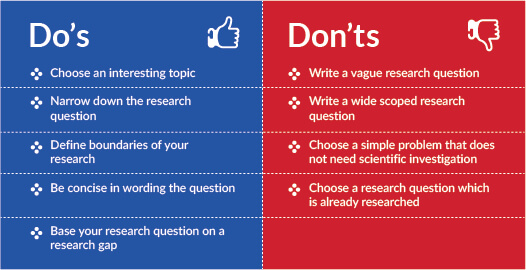
        Do’s and Don’ts of writing a research question

        writing-a-research-questio

        The takeaway

        • Research question is a question your research is seeking to answer.
        • It gives your thesis a blueprint which it needs to follow.
        • It needs to be based on a research gap.
        • It needs to be narrow, concise, clear, and focused.
        • It needs to be argumentative and based on a problem requiring scientific investigation to solve.

        It is Time to Boost Your Grades with Professional Help

        Hire a Writer

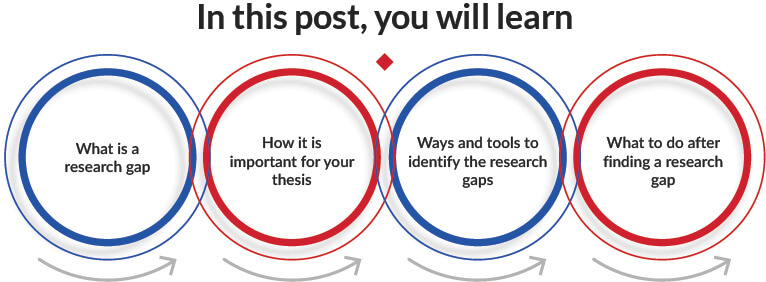
          What is Research Gap and How to Identify It?

          Define Research Gap

          The research gap is the space that is visible in the main focus of work with flaws. It is the loophole that is not covered by the past investigations, the current study identifies it! The research gap is simply named as the missing building blocks of the whole research which is demanding to be properly added with the help of the current investigation to justify the existence of the new work done in the same niche.

          How can identifying Research Gap Help Your Thesis?

          Nothing is useless if you are investigating a topic, it is ideal to promise improvement and ensure the quality of work. The worth of your work will be there by identifying the gaps. It will help you in the following ways:

          Increase value of present study

          The research gap is for sure help to the current investigation plan as it is going to manage support for the current analysis of work and make your work worth it. If you are saying that something is missing in the past studies then it is sure that if you are covering the concern then you are doing that work. It will help the work look worthwhile and important for the readers.

          Research-Gap

          Helpful for seeing work plan

          The gap will help you have a wide area of work, it is going to idealize that you can do better than others. The work plan will add the missing spaces for sure so the work plan will attain the best shape in this regard. You should see the missing concerns as important to link the work of previous investigators with your efforts.

          Help out future investigators

          You are going to add the missing parts of the puzzle! So it is sure that you are playing an animated role in this regard. You are not doing a time pass or simple chore. Your work is going to be valuable in future to ensure the value of current analysis and investigation. The role of the present work will be important and it will also add weightage to your work for sure.

          Ways & Tools To Identify The Research Gaps

          Read extensively on the chosen topic

          To find out where the gap lies, first do a thorough reading of the area of the research thesis topic. The websites of prominent journals related to the chosen field are a great place to start. Reading meta-analyses related to the topic also gives you a helpful idea about the existing trends in the research field, and what has been missing.

          Look for what the prominent authors in the field have worked on

          By finding prominent authors in the field and what they have worked on previously, you can get an idea of what the research has already accomplished. You can also look at what the authors are currently researching to get an idea of the current trends in the literature.

          Make use of online tools

          Tools such as Essential Science Indicators can help in finding new areas of research in the field. Looking through the upcoming trends in the research area, new avenues for research can be found. Other tools such as Google Scholar make it very easy to search for keywords related to the research topic and find the most cited sources in the area.

          Make a map of the literature

          After you have read and searched for trends, a map of the main ideas can be made. You can use simple tools of mind mapping and Venn diagrams to organise the main ideas and see where there is a need for further investigations in the field. This visual depiction of ideas makes it easy to find gaps in the existing research.

          Seek help from your supervisor

          If you are having trouble finding an area of a gap in the chosen field of literature, it is always a good idea to seek help from your supervisor. Getting an outside opinion might help in identifying an area you had not considered.

          What To Do, After Finding the Research Gaps?

          Find the relevant gap to fill

          The many gaps in literature call for the need to decide which topic to pursue your research. for those who really need topics related like law research paper, It is important to see what is feasible for your situation, which areas will be of the most benefit to study for your field, and what are your abilities as a researcher. These questions will help you filter out the most relevant research gap to address for your research.

          Find sources to create a research question based on the chosen gap

          Once you have picked the research gap, it is time to search for sources on it. By doing the research you can come to understand the main arguments made regarding the topic, and what evidence exists to support them. Then you can create your research questions and decide your research aim.

          Checklist for research gap

          • Read extensively
          • Look for missing parts in the literature
          • Make a map of the existing literature to find new areas
          • Take help from online tools such as Essential Science Indicator

          Do’s and Don’ts of Research Gap

          What to do and what to avoid in finding a research gap

          Research-Gap

          Award-Winning Authors

          Sarah-Walker

          Area of expertise

          Sarah-Walker

          Writing to writers, is what medicine is to the sick! No exaggerations.
          I, Sarah Walker, am a writer, a poet, and a blogger. To me creatively sharing my thoughts with others through words is an enthusiasm. Many people do avoid writing but I have been in this field for more than 6 years now and trust me, I love my work even more. To all the future writers, I am always here to help you!

          My Profile

          It is Time to Boost Your Grades with Professional Help

          Hire a Writer

            How to Write A Thesis Acknowledgement?

            In this era, every human is dependent on each other. It seems like doing anything alone is always an impossible task. It is in a human psyche that the thought of being thesis acknowledgement is what motivates them to work – that too efficiently! With such a concept comes the idea of giving acknowledgment in your thesis.

            It is considered rather professional at you if you give deserving acknowledgments in the thesis.

            What is a thesis acknowledgment?

            It is that section of your thesis where you acknowledge the efforts of those people who have helped you in your research. Acknowledgment is the smallest section of your thesis.
            Just be grateful in this section – that’s the key!

            Purpose of acknowledgement:

            Generally, the purpose of acknowledgment is to support the sense of dependency on each other. Acknowledgments are an act of gratitude for all the people who have helped you in your search. If you neglect to include acknowledgments in your thesis, it would look highly unprofessional of you. By giving acknowledgments, the reader gets the idea about the strictness of conducting research. The standard word limit of a quality acknowledgment lies from 100 – 200 words.

            Who can you thank in your acknowledgements?

            Whenever you write a thesis acknowledgment, especially for a Ph.D. level, researchers are given a choice to thank whomever they want in their acknowledgments. A researcher can give professional and personal acknowledgments as well.

            Professional acknowledgements:

            In professional acknowledgements you may thank your:

            • Sponsors of your research.

            • Sponsors of your research.

            • The people or organization who proofread your research.

            • The research groups and the lab assistance.

            • Professional colleagues.

            Personal Thesis Acknowledgement:

            While giving personal acknowledgments, you may thank your:

            • Parents

            • Spouse

            • Friends

            • People who play an inspiration role in your life

            • Personal contacts who played an important role in your research.

            The discussed people or entities are not the limit of your acknowledgment. The list may carry more and
            more sources depending on your requirements.

            How to write acknowledgements?

            When writing an acknowledgment, certain things should be taken care of:

            • List as many contributors as you want:

            • Thank your teachers:

            • Acknowledge all the financial aids:

            • Acknowledging the emotional support.

            Thank your teachers:

            Your first paragraph should be about acknowledging your teachers as if it hasn’t been for your teachers, you wouldn’t have gotten the opportunity to write your thesis and won’t be even able to complete it

            List as many contributors as you want:

            Once you are done with acknowledging the efforts of your professors, then you can add a further list of all the contributors who have helped you in your research. Don’t shy away to thank all the important contributors to your research.

            Acknowledge all the financial aids:

            While writing a thesis, the most expensive process is to gather data as it requires you to conduct further research topic and go to the whole nine yards to get your hypothesis approved. So, you rightfully must mention all the financial aids you have got to complete your research.

            Thesis Acknowledgement the emotional support:

            Writing a thesis can emotionally drain you. So, there are high chances that you would require emotional support to keep you going. It would be highly professional if you acknowledge all those people who helped you emotionally as well.

            Additional hacks for writing an acknowledgement:

            Writing an acknowledgment follows the general writing style, however, it still has a few tips and tricks that make it a thesis acknowledgment

            • While writing an acknowledgment, you must have a thankful tone.

            • Say thank you without any discrimination. Every help matters.

            • Acknowledge all the deserving people.

            • Learn some words of gratitude like; sincerest, heartiest thanks to, with due appreciation, etc.

            • Don’t try to write under the “me” approach. Have a “we” approach while writing an acknowledgment.

            Where should my acknowledgement go?

            Acknowledgments always come at the beginning of your thesis. It is the first thing that the reader reads after the title page of a thesis. Acknowledgments and abstracts do not appear in the table of content as they both come before that.

            Example of a thesis acknowledgement:

            WHAT DO YOU KNOW ABOUT THESIS ACKNOWLEDGEMENT

            Special Thanks to Professor Dr. John

            The completion of this study wouldn’t have been possible without the sheer support of my professor Dr. John Willy who has guided me in every step. I am thankful for this opportunity given by him. I would also like to say thanks to the faculty member of the social sciences department of the University of Stanford, USA, whose valuable knowledge and expertise helped me to cope-up with a tough topic as “Feminism and its modern dilemmas”.

            Research Question for Thesis Aknowledgement

            I further want to present a huge amount of gratitude to my class fellows who helped me with their knowledge to formulate my research questions. I would like to offer my special thanks to the XYZ publication house for finding my doctoral thesis worthy of investment.

            Accurate Research

            Furthermore, I want to acknowledge the contribution of the ABC organization for funding my research project, or else I would not have made this far in my research.
            Your organization provided me with the most valuable asset of all time.

            Emotional Support

            Last but not the least, I want to present my dearest gratitude for always being my emotional support and teaching me to face every hurdle with intelligence and confidence.

            Dos and don’ts of acknowledgements:

            Dos Don’ts
            Be grateful for every little help. Don’t be rude while acknowledging.
            Keep the sentences short and precise. Don’t start telling a story.
            Play a fair game while saying thank you. Do not discriminate while saying thank you.
            Always have a WE approach. Do not have a ME approach.

            That’s all folks!

            You have reached the bottom of the acknowledgment well. With such a complete and efficient guide, anyone can ace in writing the best thesis acknowledgment. Chant these tips until they are at your fingertips. Good luck!

            Author
            R.Watson

            Blogging has been my favourite part-time ever since. However, after graduating from high school, I chose to blog, as my career. It has been 5 years and I am here, blogging my heart out. Writing is the best way to creatively mention your thoughts, and I am a creativity expert!.

            My Profile

            It is Time to Boost Your Grades with Professional Help

            Hire a Writer

              Importance of Abbreviations and Acronyms in Dissertation

              You see a dissertation that has a perfect first chapter and a flawless last chapter, and everything in between is spot on as well. Can you call this dissertation perfect? Well, a big “YES” may seem like the right answer here, but guess what? You cannot call a dissertation perfect only based on the information given above. Here’s why?

              A dissertation is composed of many portions, and you have to get every one of them right. As opposed to what most think, a dissertation does not start with chapter 1 and it surely doesn’t end on the last chapter.

              Attention!

              Here, Portions do not mean chapters. Apart from the chapters, a dissertation has other little portions like, abstract, acknowledgements, list of figures, appendices, and list of abbreviations.

              Your dissertation can not be perfect if you don’t get these portions right – and this blog will discuss one such portion in detail – the list of abbreviations.

              In this blog, you will find all the information you need to nail the “list of abbreviations” section.

              What are Abbreviations and Acronyms?

              Let’s first start with understanding what abbreviations are, the purpose behind their usage and the rules for using abbreviations in your dissertation.

              You probably already know what abbreviations are – they are short forms of words. For example, the word, “doctor” can be written as, “Dr.” which is an abbreviation.

              Whether you plan to hire a premium thesis service or go for a cheap thesis writing service you should let them know if you want  to add a list of abbreviations in your thesis,

              Acronyms, on the other hand, are abbreviations that are constructed using the first letters of all the words in a term. For example, USA is an acronym of United States of America.

              Be Careful!

              The first letters of words like “and”, “of” and “for” don’t make it to the abbreviation.

              Why do you include them in your dissertation?

              Generally, acronyms and abbreviations are used to avoid the use of long words. They serve the same purpose in your dissertation as well. They help maintain the flow of your paper by allowing you to use the shortened form of a term instead of using the full word or phrase.

              Rules for Using Abbreviations and Acronyms

              Rule#1 – When using a particular abbreviation in your dissertation for the first time, always use the full form followed by the abbreviation in parenthesis.
              Rule#2 – Only follow Rule#1 on the first appearance of a particular abbreviation – when using the same abbreviation again, just use the shortened form.

              Attention!

              If you choose to omit any abbreviation from the list, always define it on the first appearance.

              Example of Acronyms in a Thesis or Dissertation

              “The literature suggest that reinforced concrete (RC) has a wider range of application than Fibre Reinforced Polymers (FRP). As a result, RC is used more frequently in the construction industry than FRP.

              This example is the perfect demonstration of both the rules. The text in green shows the first appearance of the abbreviations (rule#1) and the text blue shows how abbreviations are used later in the thesis (rule#2).

              List of Abbreviations in a Thesis or a Dissertation

              You are now familiar with abbreviations and acronyms and you know how to use them in your dissertation, now is the time to compile the actual list of abbreviation.

              When and why is there a need for a list?

              A typical dissertation contains several abbreviations. If your dissertation contains abbreviations that your readers (which in case of a dissertation, are supervisors and evaluators) might not be familiar with, having a list of abbreviations section can assist them in understanding those abbreviations and they can refer to it as a guide.

              Remember!

              This is not a mandatory section and if your dissertation contains only a few abbreviations, there is no need for a list.

              Where Does a List of Abbreviations Go?

              When including a list of abbreviations, insert them near the start of the report after your table of contents. To make it clear that your document contains an abbreviated list, also add a separate heading to your table of contents.

              Note: The page number for your list of abbreviations should continue from the page number that proceeds it; there is no need to reset it for this section

              Where do you put the list of abbreviations?

              The list of abbreviations should appear at the beginning of the document, just after the table of contents. The list should also be included in your table of contents.

              If you only use a few abbreviations, you don’t need to include a list—follow the guidance below on how to define abbreviations within the text

              How is it written?

              The abbreviations in the list must be arranged in alphabetical order.

              What purpose does it serve?

              This section of your dissertation serves two main purposes:

              • It helps your supervisor better understand your research and,
              • It helps maintain the flow in your writing by not having to define the abbreviations again and again.

              Be Careful!

              Do not include common abbreviations – because they will fill out the list with terms that your readers are already familiar with.

              Here is a few examples of acronyms and abbreviations that you should not include in your list; USA, PhD,Dr. and Ltd. etc.

              Where Does a List of Abbreviations Go?

              You can’t just put the list of abbreviations anywhere you want. Like everything there is a proper place for the list of abbreviations – which is in the beginning of your dissertation, before the first chapter and after the table of contents. And also make sure to include the heading of list of abbreviations in the table of contents.

              Be Careful!

              Do not reset the page number for your list of abbreviations – continue from the page number that precedes the list.

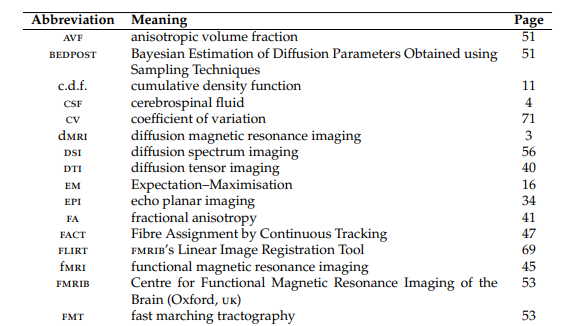
              Example list of abbreviations

              Here is an example of how a list of abbreviations look like in a dissertation. This list mentions the abbreviation, the full form of it and the page number on which the term is first defined.

              Abbreviations in APA

              APA is among the most popular formats out there and hence a blog on list of abbreviations would be incomplete without discussing the APA guidelines on using abbreviations. So, when using abbreviations in APA formatted dissertation, make sure to follow these guidelines:

              • The full form of abbreviations and Acronyms must be spelled out completely on the first appearance in the document.

              • Abbreviation must only be used if they fulfil the following conditions: follows a convention, is apt to be familiar, will prevent unnecessary repetition, and will save space.

              • An acronym or an abbreviation must not be used at the beginning of a sentence.

              Things to do and things to avoid

              Dos Don’ts
              Always continue the numbering. Do not reset the page numbering for this section.
              Include only those abbreviations that require explanation. Do not include the common abbreviations that your readers might be familiar with.
              Always include the heading of list of abbreviations in the TOC. Don’t omit the heading of List of abbreviations from the TOC.

              The take away:

              • For a perfect dissertation, you don’t just have to make sure that all the chapters included in it are flawlessly written, you also have to pay attention to the other, smaller sections of your dissertation.

              • List of abbreviations is one of those portions that are not included in any of the chapters in a dissertation.

              • List of abbreviations assist your reader by defining the abbreviations used in your thesis.

              • It comes after the table of contents and before the first chapter.

              • When using abbreviations in APA format, there are certain guidelines that you must abide by.

              Now, you know everything about the list of abbreviations and you’re all set to nail this portion.

              Congrats! You are one step closer to a perfect dissertation!

              Author
              R.Watson

              Blogging has been my favourite part-time ever since. However, after graduating from high school, I chose to blog, as my career. It has been 5 years and I am here, blogging my heart out. Writing is the best way to creatively mention your thoughts, and I am a creativity expert!.

              My Profile

              It is Time to Boost Your Grades with Professional Help

              Hire a Writer

                How to Write a Thesis Abstract?

                Are you finished with your thesis?

                Ready to submit it and happily wave it goodbye?

                Wait a minute!

                Did you forget to write the abstract of your thesis?

                Then do not make the grave mistake of submitting your thesis without an abstract.

                But you don’t have any idea how to write a perfect abstract for that perfectly written thesis you were about to submit?

                No worries! This blog is strictly for that purpose! So let’s go and see how you can become a master at writing your thesis abstract.

                What Is An Abstract?

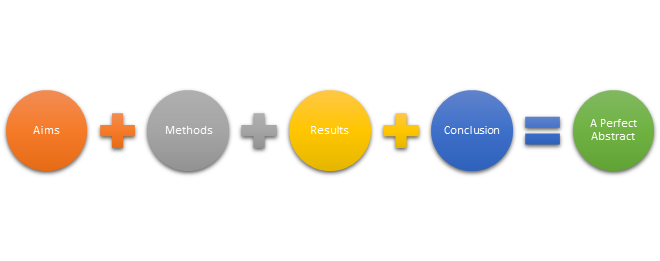
                An abstract is the summary of the thesis. It is the short version of the long version (thesis). As much simple as it sounds, the abstract also has a structure and format that needs to be followed. Every main point of the thesis needs to be outlined in the section of the abstract.

                If you are looking to outsource your thesis to a master thesis services you can judge how good they are, by viewing a sample of their abstract.

                Word Count of the Abstract

                Before you start writing pages upon pages for the portion of the abstract, stop! An abstract is the shortest portion of the whole thesis, (of course, apart from the title page). The word count of the abstract fluctuates from 150 words to 300 words. So, no need to work overboard because it will backfire. How? By destroying the first look of your thesis.

                The Main Components of the Abstract

                There are some components that must be included in the writing of the abstract. Ignoring these points will make your abstract incomplete. Do not think about making this crime and see below all the essentials you need to incorporate to make your abstract perfect!

                Components of the Abstract
                • Aims

                  The aim you state in the abstract is simply the aim of your study. Remember, you listed the aims of your study in the chapter of the introduction. At the beginning of your abstract, define the purpose (aim) of your thesis. It should be the first thing you write because it will inform the reader about the achievements of your thesis research.


                  You can briefly define the variables of your study but do not provide a detailed description, that part has been covered in the chapter of the introduction. After providing aims, write the problem statement and objectives of your thesis. Start the abstract while keeping in mind that it should give proper information about the idea behind the thesis.

                • Methods

                  Now write the approach used for the purpose of data collection. Do not deeply indulge in explaining the qualitative or quantitative method of data collection. Just write in two sentences how, from where, and from whom the data was collected. In short, define your sample in a line or two.


                  Refrain from writing strengths and weaknesses, and the validity of your methodological approach.

                • Results

                  Report your findings in simple words. The findings of your research will not be written in numbers, graphs, or tables. If there were more than one hypothesis in your thesis research then only state the result of the main hypothesis. No need to make it lengthy, because that is what the chapter of result is for.


                  Also, write the statistical analysis you applied to interpret the results. This will instantly inform the readers about the authenticity of your results findings.

                • Conclusion

                  Time to wrap up the abstract. Write the conclusion you have derived from the findings of the result. Only address the main point of your research. Clearly write it so the reader knows if your hypothesis was proved or not.


                  You can include recommendations and future implications in the conclusion of the abstract but it is not quite necessary to do so. If you want to avoid this part, no need to sweat. Your abstract will still be complete without it.

                • Keywords

                  The heading of keywords is included in the abstract. Right after the conclusion of your abstract, you will put a heading of keywords. In this, the words of main concepts will be singled out. This area is written to make your work appear in the searches for relevant work. If a researcher is searching for some literary work on your topic, the keywords will make your thesis appear on the search.

                Dos and Don’ts of Writing an Abstract

                You know what should be written in the heading of the abstract. But still, there are some things that can put a negative or a positive impact on your abstract.

                The Dos The Don’ts
                Only use formal language. Do not put casual and layman phrases.
                Keep the language simple. Do not write jargon.
                Use supportive sentences for your work. Do not write the unaccomplished part of the research.
                Write the full name of a term or institute once then use abbreviations. Do not repeat the words.
                Write in the past tense as the research has already been conducted. Do not write in the present or future tense.
                Write in the third person. Do not use ‘I’ or write in the first person.
                Use active voice. Do not use passive voice.
                Write well-structured sentences. Do not write incomplete sentences.
                Revise and check to ensure every point is included. Do not assume that the abstract is not an important part of your thesis.

                When to Write an Abstract?

                You know how you can perfectly write your abstract and all the dos and don’ts that will further increase the authenticity of your thesis abstract. But when is the right time to start working on your thesis abstract? You should only write the abstract after you have finished writing all chapters of your thesis. The common reason for this is, there is no way you will be able to write the abstract if you do not know what your results and thesis conclusion is. In the end, the abstract is the summary of your thesis. A summary cannot be written prior to the body.

                Why Is It Important To Write A Good Abstract?

                Every part of your thesis is important, especially the abstract. Why? Because in just several minutes it provides complete knowledge to the reader about what you did for the research, why you did it, how you did it, what you found from all of it, and what it means with respect to your thesis statement and aims of the thesis.

                Moreover, the abstract is important for the reader to determine if your thesis work is relevant to their research topic.

                Pro-Tips for Writing an Abstract

                To make the process of writing an abstract more easy, check the tips shared by thesis pros.

                • Focus On Your Own Research

                  You can review the abstract of other people’s research to get an idea about how you should also write the abstract. But remember, your research is different than anyone else’s and you should write the abstract accordingly.

                • Keep It Simple

                  No need to write complex words or jargon. The simple the language the easier it will be for the reader to understand your thesis main points.

                • Be Specific

                  Avoid dragging the words just because you need to reach the word count. Be precise and write to the point.

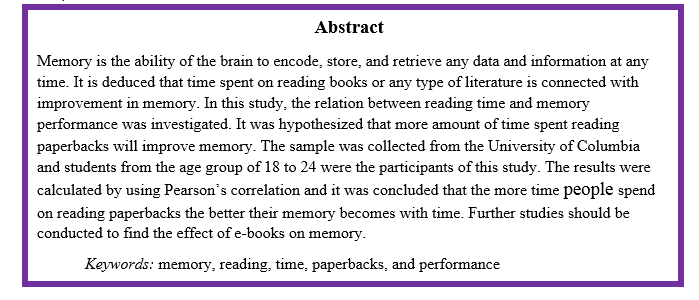
                Abstract Example

                Need an example to know whether you have the correct idea of writing an abstract or not? Then see the sample below.

                Abstract Example

                You Have Achieved Mastery!

                After reaching the end of this blog, you have become the master of writing the thesis abstract. Now go ahead and write it so you can finally submit your thesis once and for all. Good luck!

                Author
                R.Watson

                Blogging has been my favourite part-time ever since. However, after graduating from high school, I chose to blog, as my career. It has been 5 years and I am here, blogging my heart out. Writing is the best way to creatively mention your thoughts, and I am a creativity expert!.

                My Profile

                It is Time to Boost Your Grades with Professional Help

                Hire a Writer

                  Table of Contents for Thesis Proposal

                  The table of contents for thesis proposal on the page that is dedicated to the chapters and their respective page numbers. The headings and subheadings are also mentioned on the page. The formatting for this page should be consistent and clear.

                  The table of contents is added after the introduction page and before the abstract. The table of contents should be of two pages, not more than that.

                  If you are planning on writing your thesis, do not skip this page and read further for the format and pattern of the table of contents.

                  In this post, you will learn:

                  • What should you include in the table of contents?

                  • Appendices and tables

                  • The Do’s and Don’t’s

                  • Examples of the table of contents

                  • A checklist for the table of contents

                  Now that we have covered what the table of content is, you need to know what is included within the two pages of the list. If you feel like any portion of your dissertation is troubling you, you should get dissertation writing help by all means.

                  What should you include in the table of contents?

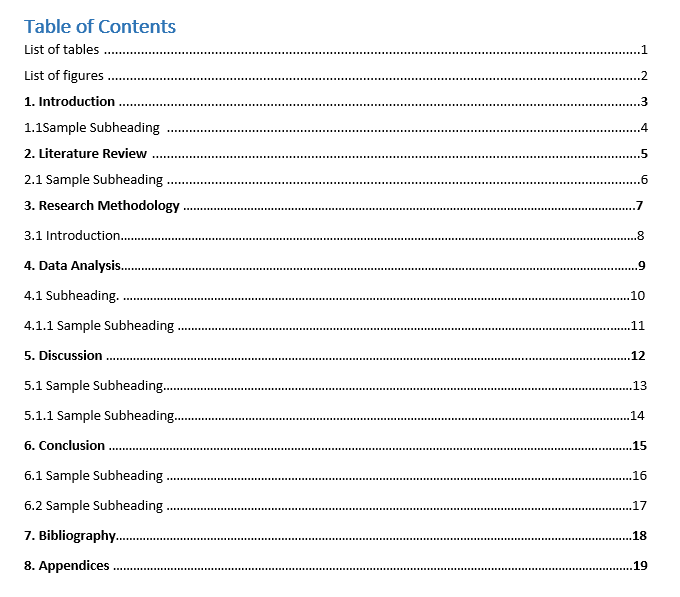
                  The table of content is an organized list that provides basic knowledge of what your thesis contains. The names of the chapters along with subheadings are added on the left side of the page. Whereas the number of the pages is written on the right side.

                  The table of contents is created for the sole purpose of locating a chapter and subheading by the reader. One should check with their universities and colleges if they have a specific format for the table of content.

                  Let us look into the general format of a table of content. The chapters (first level) and their second-level headings should be added to this. Remember, your motive behind creating this page is to make it easy for the reader to locate your chapters.

                  For example:
                  Level one heading – Chapter 2. Literature Review
                  Level two heading -2.1 Research Gap

                  Appendices and tables

                  The table of contents must include your appendices and table of figures. If you have more than three and four figures and tables, then they deserve their chapter. But if you dint get a lot of results from research, then those tables and figures can be shared in the list of contents.

                  Now the question arises, what does the appendices chapter include?

                  • The original interviews, surveys, and questionnaires that were used to collect data for the research
                  • Not more than two figures and tables should be added to the table of content.
                  • If did not use a lot of abbreviations then you should share them in the table of content. But if you have tons of abbreviations and technical terms, then they should be listed in their chapters.

                  What are the Do’s and Don’t’s of the table of contents

                  The table of content may seem like a simple two-page table but in actuality can badly affect your thesis if not composed correctly. Due to this reason, one should be extra careful while numbering the pages and creating the different level headings.

                  Dos Don’ts
                  To make the list of content accurate, it should be created at the end of your thesis. No matter where the placement is. The list of content should not be made at the beginning of the thesis.
                  Create multiple drafts of the list of contents to avoid mistakes. The list should not be finalized in the first go, it should be checked and rechecked for accuracy.
                  The Acknowledgement and Abstract are added before the table of contents. Acknowledgment and Abstract of your thesis are not added to your table of content. Both of them are added before the table.
                  The heading number you add on top of each chapter should be the same as the one that is added on the right side of your table of content Do not make the mistake of numbering the chapters wrong. The entire table of content will become futile.
                  The figures and abbrevations are added to the table of content The list of figures and abbreviations should not be added to the table of content if the quantity increases by five.
                  The format of the table of content should be according to your university’s requirements. Do not submit your table of content without proofreading it.

                  Example of the table of contents

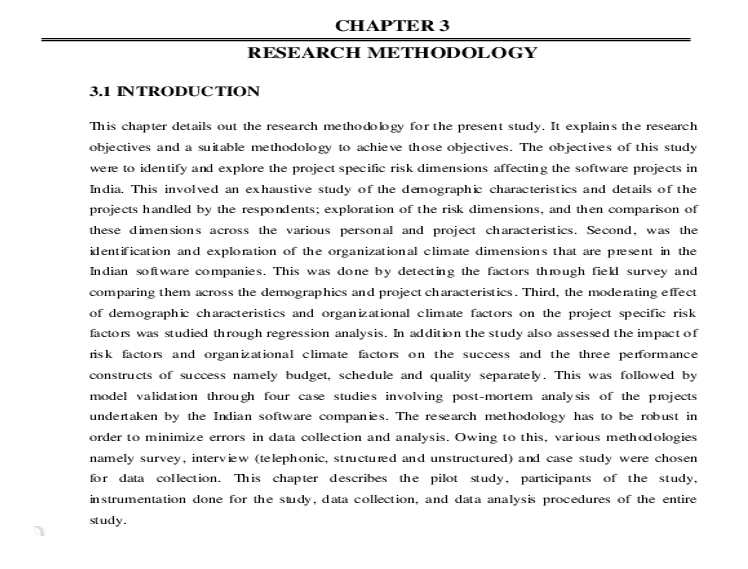
                  The page numbers assigned to the chapters in the table of contents should be the same as the number assigned at the beginning of each chapter. The example below demonstrates just that:

                  Chapter 3

                  Checklist for the table of contents

                  To achieve perfection in the list of contents, you need a set of rules to follow. A starter’s checklist will guide you to do just that. Below is a checklist that will make sure your table of content is up to mark. And no matter what academic level of thesis you compose, this checklist can be used for all of them:

                  • Collect the relevant information about the format according to your university and referencing style.

                  • Start with the list of tables and bold the main chapters.

                  • All the titles of the chapter should be level one heading and the subheading should be level two.

                  • The numbers of the chapters and the page numbers given in the table should tally.

                  • All pages should be numbered after the chapters are written.

                  Final words:

                  To create the table of contents for your thesis, use Microsoft word and customized it according to your thesis requirement. Apply the headings according to your style of preference. You can easily make the changes to the table itself at point of time with the help of the Microsoft Word table of contents.

                  It is Time to Boost Your Grades with Professional Help

                  Hire a Writer

                    List of Figures & Tables in the Thesis

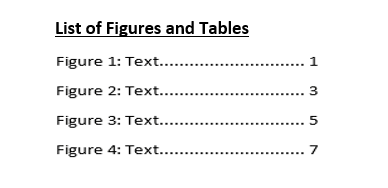
                    A list of figures and tables includes all the figures that are used or cited in the thesis and the tables that are made to demonstrate something statistically. A separate list of figures and content is not a must when there is only one or two figures or tables. In such a case you can include them in the table of content. But if the students are using several figures and tables then a separate list for them becomes a must-have requirement in the thesis.

                    list-of-figure

                    Before going to learn how to make a list of figures and tables, students should first know about how to insert captions with the figures and what is the correct pattern to write the page numbers because these are the basic requirements to generate the final list of figures and tables automatically.

                    Use Numbers and Clear Titles in the Text

                    Whenever inserting a caption to define a figure must remember that if you have taken the figure from an outer source then your caption must include the name of the source. Some important points concerning titles ad page numbers are given below.

                    Page Number should be Correctly Written

                    When you create a list of figures and tables it comprises the page numbers where the figures or tables are located. Always use a clear format. Insert page numbers at the bottom of the screen in Roman and close them under the round bracket. Image illustration is given below:

                    page-numbers

                    In this way, the checker can easily locate the page number after going through the list of figures and tables.

                    Title of the Figures should be Appropriate

                    The caption of the figure or table should be most appropriate that exactly suit the figure. In the list of figures, the title of the figure is what you inserted in the caption so it should be clear and easily navigate the figure.

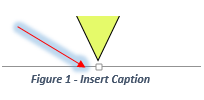
                    How to Insert Caption with a Figure?

                    You can easily insert a caption to the figure while writing in a Word document. Here is some simple step that can guide you in this regard.

                    insert-caption
                    • Step#1

                      Left click on the figure

                    • Step#2

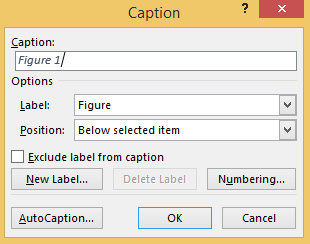
                      Select the Insert Caption Option (a dialogue box will appear as shown
                      in the picture)

                    • Step#3

                      Write a specified title next to the figure in the caption box.

                    Note: The word ‘Figure’ is known as a label. You can replace it with ‘image’ or ‘picture’ or any other word that you consider would be suitable. If you don’t want a label before the title of the image so you may exclude it from the caption.

                    caption

                    How to Generate Lists Automatically

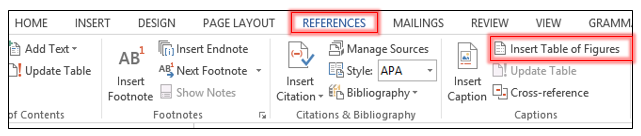
                    After writing clear and proper captions and page numbers, you can generate a list of figures and captions automatically; Word gives you this option. By following some guidelines below, students can do it easily.

                    Tool Bar
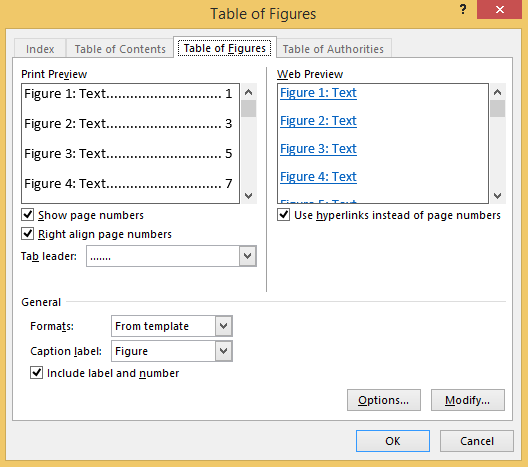
                    • In the menu, bar Word gives you the option of references. By going into this option you will further find an option with the title ‘Insert Table and Figures’ (as shown above)\
                    • Open the insert table and figures option and you’ll see a dialogue box on your screen.
                    • If you have perfectly inserted the captions and the numbers then the list would be fine.
                    • Mark the ‘show Page numbers’ and ‘Right Align Page numbers’ with a ✓.
                    • Check the web preview.
                    • If there is any need for modification so you may go for it.
                    • Once you have finalized your list, click OK to move forward.
                    table-of-figures

                    Checklist for List of Tables

                    • Your list of tables should be well formatted

                    • mention all tables except those that are particular to another list

                    • all titles/captions should be accurate and relatable

                    • Page numbers are clear and correct

                    Justify Alignment

                    Make sure that the alignment of your list of tables and figures must be justified which is denoted with four equal lines in the Word Home menu bar.

                    formatting-tool

                    Simple and Decent Font Style

                    Use simple and decent font style to create the list of tables and figures because the checker doesn’t want fascination but the authenticity and accuracy are what matters the most. The use of multiple and colorful fonts doesn’t show your creativity. It expresses your immature state of mind.

                    Students should try to attract their teachers by their exceptional research and writing skills to show their colors of knowledge and intellect.

                    fonts

                    What to Apply and What to Avoid?

                    Here are some important points which can help you about what should be avoided in the list of figures and tables and what are the essentials to include.

                    Dos Don’ts
                    Justified format with the right alignment of page numbers. Change the title to a new one that differs from the actual caption
                    Using Labels Using Bullets
                    Use Simple fonts Enlarge headings and use multiple fonts
                    Use a single color for the entire list Use different colors
                    Use straight writing Use bold, italic, underline

                    Additional Lists are a Plus

                    Additional lists like abbreviations and definitions of terms can be a plus. You must add fruitful content in your thesis that can strengthen it and make it worthy to represent. Table of Content and List of Figures are the two main features of a writing thesis which’s value cannot be challenged. The way you design these two components tells the checker that how much interest you have shown in your thesis. It also exhibits your keen focus and hard work. The heavier these lists are, the more they add credibility to your thesis.

                    Conclusion:

                    Almost every aspect of the list of figures and tables has been discussed. Hope it would be useful for the students and will guide them in the most appropriate direction for the creation of a list of figures and tables. Students should be mature enough to pick and learn useful tips at the earliest. Many students don’t want to use automatic list generate and most of the students prefer this automatic list generation method. In both cases, it’s better to take the experts’ assistance to carry out the task in a more proficient manner. Lastly, you have to make sure to format the list of figures the right way. Make sure to send your thesis for proofreading and editing to the best thesis editing service – because the expert proofreaderswill ensure that the list of figures in your dissertation is formatted correctly.

                    It is Time to Boost Your Grades with Professional Help

                    Hire a Writer

                      24/7 support
                      +1-2268391066 (Sales) +1-6035925149 (Support)
                      2 whatsapp WhatsApp Now Avail 50% Flat Off on Live Chat!